

Categories
Home Safety, Homeowner Resources, Safety TipsPublished May 14, 2026
Kitchen Fire Prevention - How to Cook Safely Every Time

Unattended cooking equipment causes more home fires than any other factor. In my 27 years fighting Detroit fires, I've investigated dozens of kitchen fires that could have been prevented - most of them started while someone stepped away to answer the phone or check on dinner elsewhere. This guide breaks down what causes kitchen fires, how to stop them cold, and what to do if one starts.
Understanding the kitchen fire hazard
Unattended cooking is the leading cause of home fires. What makes kitchens so dangerous is the combination of high heat, flammable materials, and human distraction. People think they'll "just run upstairs for a second" or "quickly answer the phone." That second is all it takes.
A small flame can turn into a major fire in less than 30 seconds. I've pulled families out of homes where they thought stepping away was safe. In my investigations, I've seen how fast fire spreads from a cooking pot to cabinets to walls. Most of the time, the person who started the fire could have stopped it if they'd been there.
The common mistakes are predictable. People leave the stove unattended while oil heats. They wear loose, flowing sleeves and aprons that catch fire easily. They stack rags and towels near the stove, create clutter on counters, or let children wander into the cooking zone. Every single one is preventable.
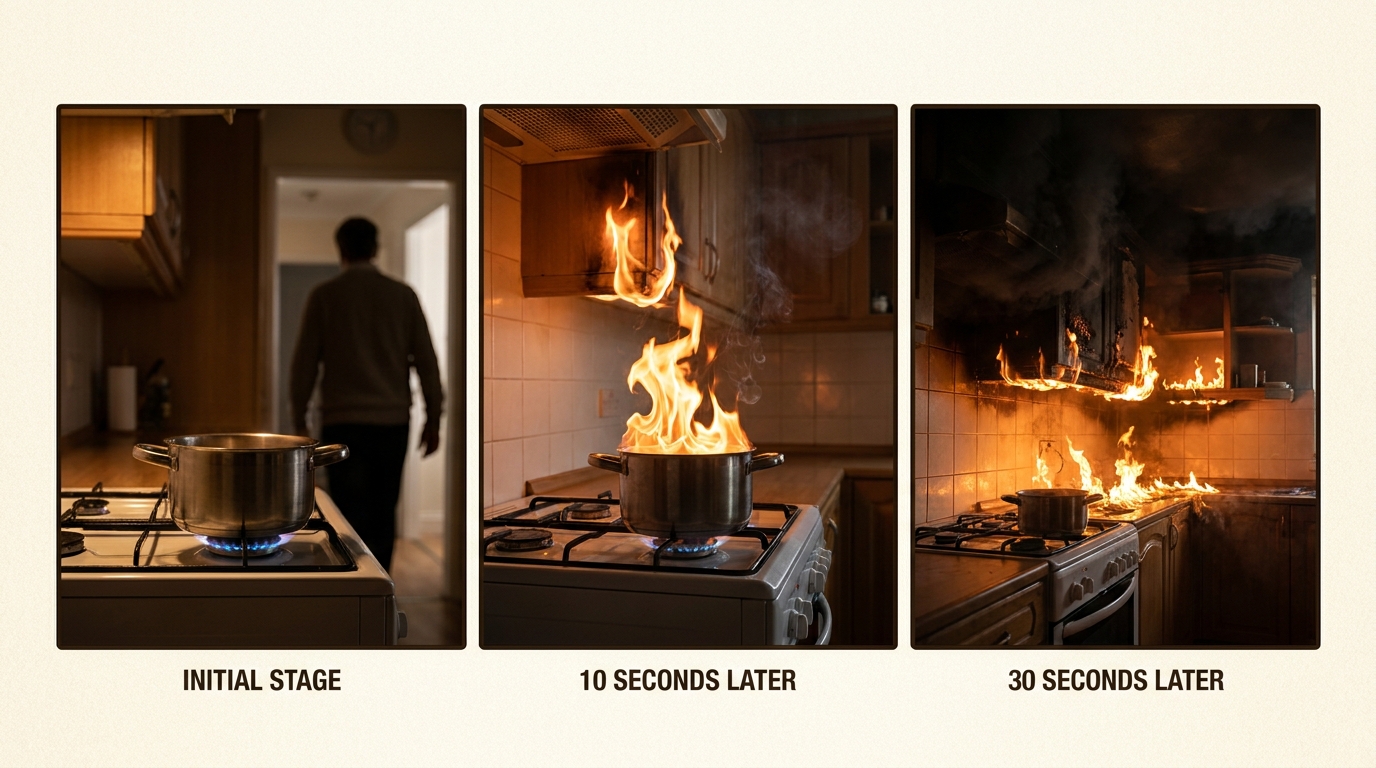
A kitchen fire can transition from a small pot to a full-room hazard in just 30 seconds.
Prevention: the step-by-step process
Stay in the kitchen when cooking with heat. This is non-negotiable. When you're frying, grilling, or broiling, you're in the kitchen. Not checking email in another room. Not answering the phone. Not starting a load of laundry. You're there with your attention on what you're cooking. The reason is simple: if something goes wrong, you've got seconds to react. Most cooking fires could have been stopped if someone had been there with a lid or a fire extinguisher.
Wear appropriate clothing. Keep sleeves short or tightly rolled up. If you're wearing an apron, make sure it's tied close to your body, not hanging loose. Loose fabric catches fire easily and melts into burns. I've seen the aftermath, and it's preventable.
Keep appliances clear of flammable materials. Before you start cooking, clear the counter and cabinet areas around your stove. Put away rags, towels, and packaging. Kitchen fires that started on the stove are bad enough, but I've investigated fires that started in the cabinet next to the stove because someone had stored paper or towels too close. Keep everything that can burn away from heat sources.
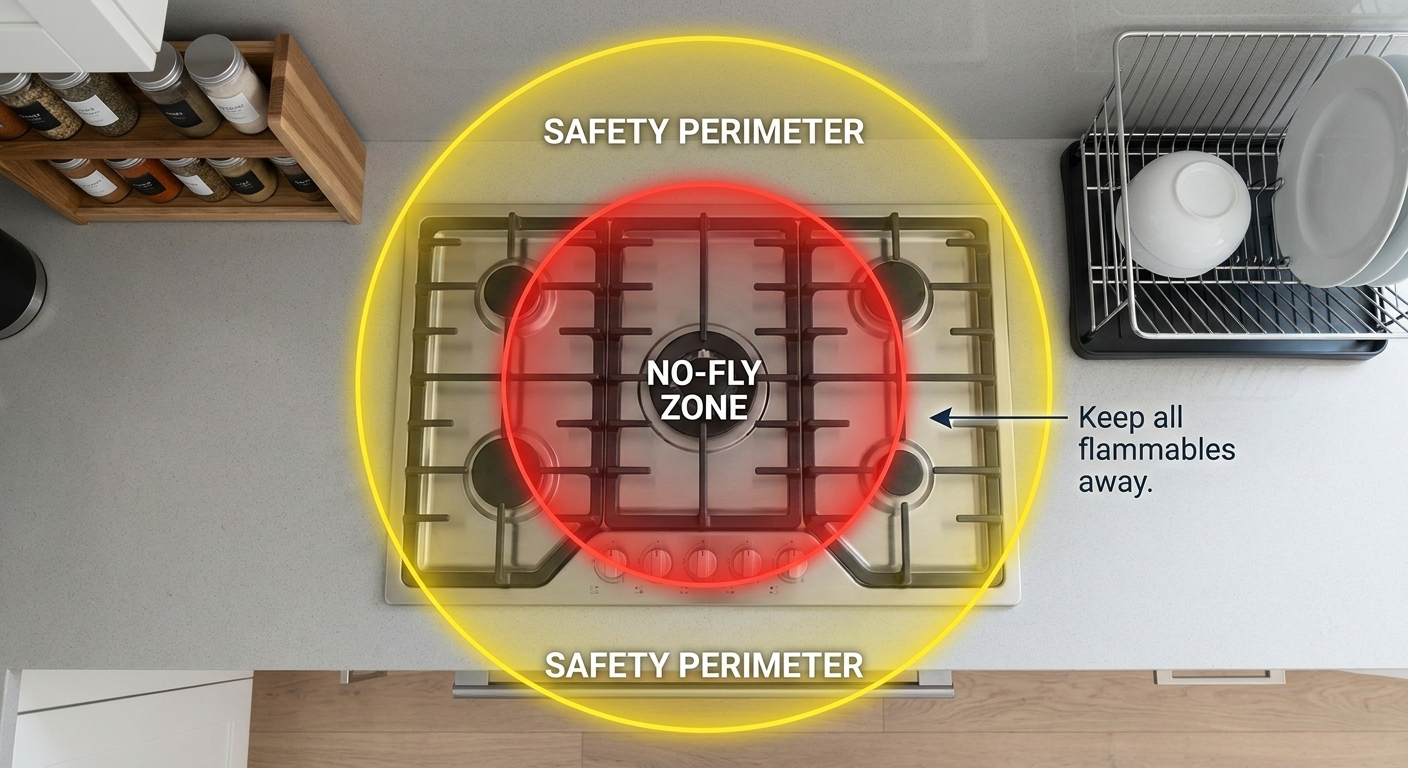 Keep children away from all cooking areas. Kids reach, touch, and get too close. Designate a "kitchen boundary" during cooking. Never leave pots, pans, or anything hot within reach. If you've got young children, make the kitchen an off-limits zone when you're cooking.
Position grills properly if you're cooking outdoors. Place grills at least 10 feet away from siding, deck railings, eaves, and overhanging branches. I've seen deck fires that started from grills positioned too close to the house. The extra distance is worth the inconvenience. The heat from a grill can travel, and wooden decks catch fire more easily than people realize.
Have a fire extinguisher ready. Keep an ABC-rated fire extinguisher in your kitchen. Small grease fires can be stopped before they spread if you know what to do. Know how to use it: pull the pin, aim at the base of the fire, squeeze the handle, and sweep side to side. Never use water on a grease fire . it splatters and spreads the oil.
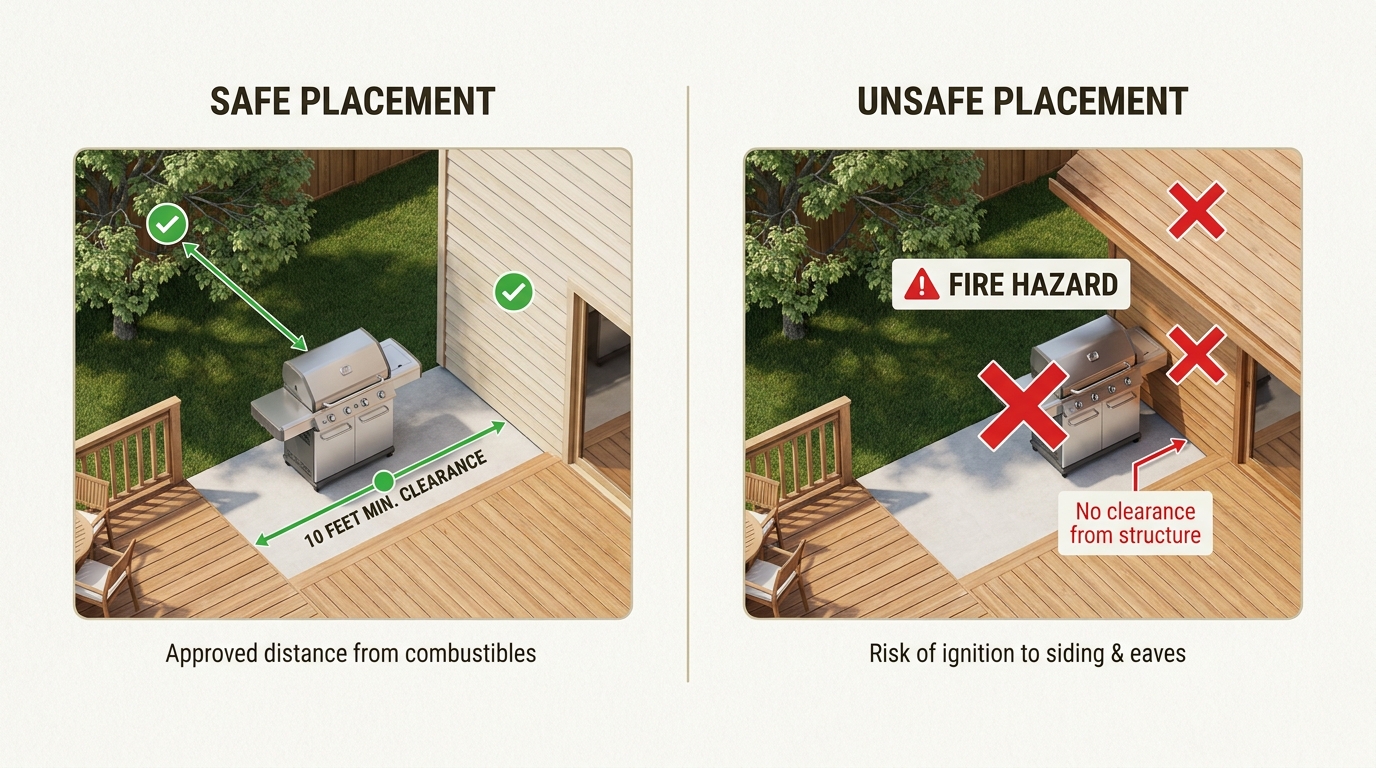
Proper grill spacing is essential to prevent radiant heat from igniting your home's siding or deck.
If fire starts: how to respond
In the first 30 seconds, prevention is everything. If you're still there, you can stop it.
If you've got a small grease fire, turn off the heat immediately. Cover the pot with a metal lid . not glass, which can crack from heat . and let it cool. Don't move it. Don't panic. Just let it sit.
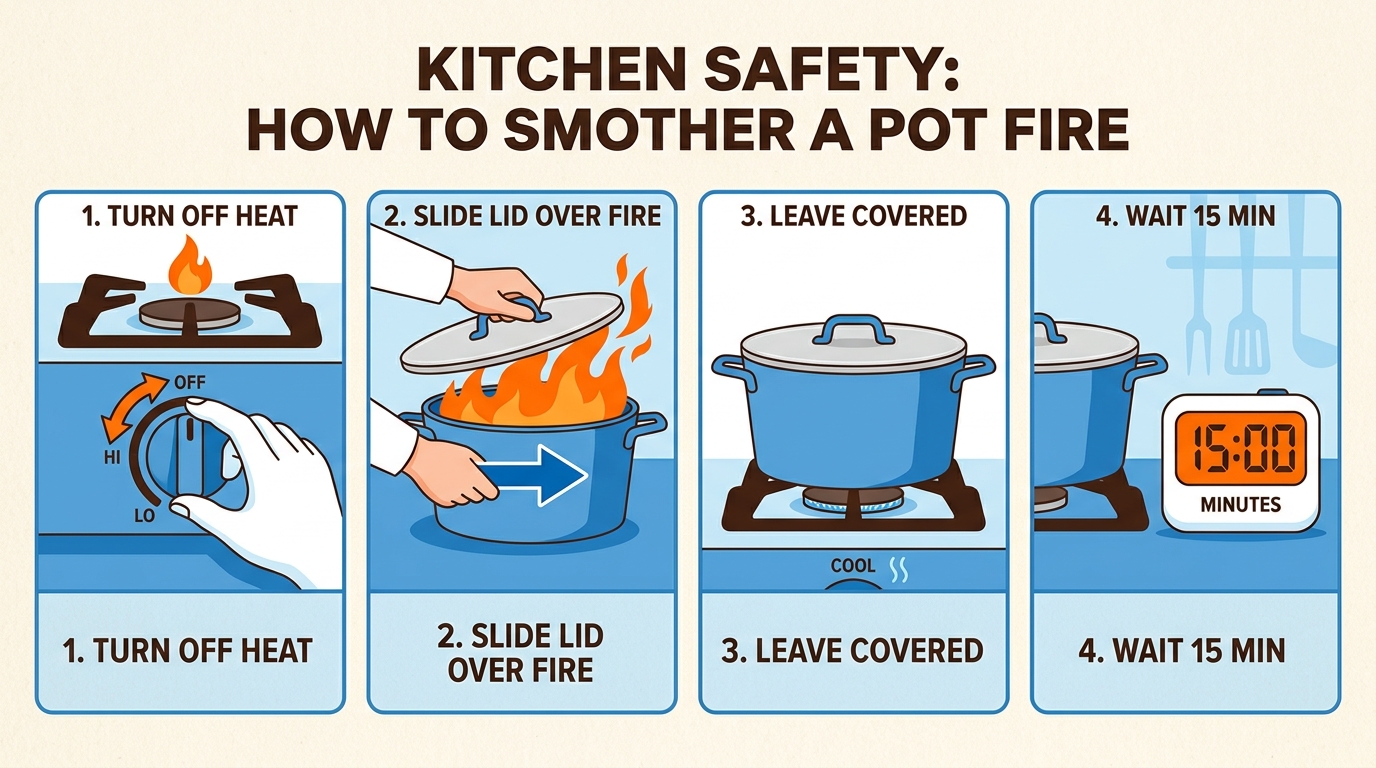
Follow these four steps to safely smother a grease fire without spreading the flames.
If the fire has spread, use your fire extinguisher. Use an ABC-rated extinguisher (ABC for general fires, though D-rated extinguishers exist for metal fires in specific situations). Aim at the base of the fire, not the top.
If the fire is spreading beyond the pot or if you can't control it in the first few seconds, leave immediately. Don't try to be a hero. Close doors behind you, call 911, and get out of the house. Never go back in.
Summer context: grilling season and outdoor entertaining
Summer in Detroit brings grilling season, and with it, an increase in outdoor cooking fires. Late May through August, people spend more time on decks and in backyards. More entertaining means more distractions in the kitchen and more grills running in close proximity to houses.
I've seen deck fires spike in late May and June when people first pull out their grills and forget about proper spacing. The combination of warm weather, outdoor gatherings, and grill use creates a seasonal hazard that needs specific attention.
Matt's field insights
A few years back, we responded to a house fire on the east side of Detroit. The family was cooking dinner - a father in the kitchen working on a stir-fry, high heat, oil in the pan. He stepped into the living room to watch the game. He was gone maybe three minutes.
By the time his wife realized something smelled wrong, the oil was smoking hard. She panicked. Instead of turning off the heat, she grabbed the pot to move it. Severe burn on her hand. Fire went from pot to cabinet to wall in what felt like seconds.
What could've changed everything: He never leaves the kitchen when oil is heating. That was the only mistake. If he'd stayed, he turns off the heat. If she'd turned off the heat instead of moving the pot, the fire stops right there.
The house was repairable, but the family was displaced for three months. The burn on her hand took longer to heal than the fire took to damage the structure. And that's preventable.
Putting kitchen fire safety into practice
This week's action: Cook one full dinner with your phone in another room. No distractions. No checking email, answering texts, or stepping away. Notice how it feels to be fully present. Most people realize they've never actually done this before.
For next steps, read about your escape plan post and how to prepare the rest of your home. And if you live with family, start talking about what each person would do if a fire started.
At LIVgreat, we care about your home - not just buying and selling it. Fire safety is part of that commitment to families in Detroit.
________________________________________________________________________
Written by Matt Crouch with LIVgreat Real Estate, your trusted Washtenaw County local expert.
Email: matt@livgreatrealestate.com
Website: https://livgreatrealestate.com
Follow us on social media!
Facebook: LIVgreatrealestateA2
Instagram: @livgreatrealestate
YouTube: @LIVgreatRealestateA2
TikTok: livgreatrealestate
🎧 Listen to our Podcast
Stay inspired and informed even on the go! Tune in to our podcast for real estate tips, local insights, and motivation designed to guide your journey.

Erin Galinac
| LIVGreat Real Estate | Good Company | PLACE
or another way